
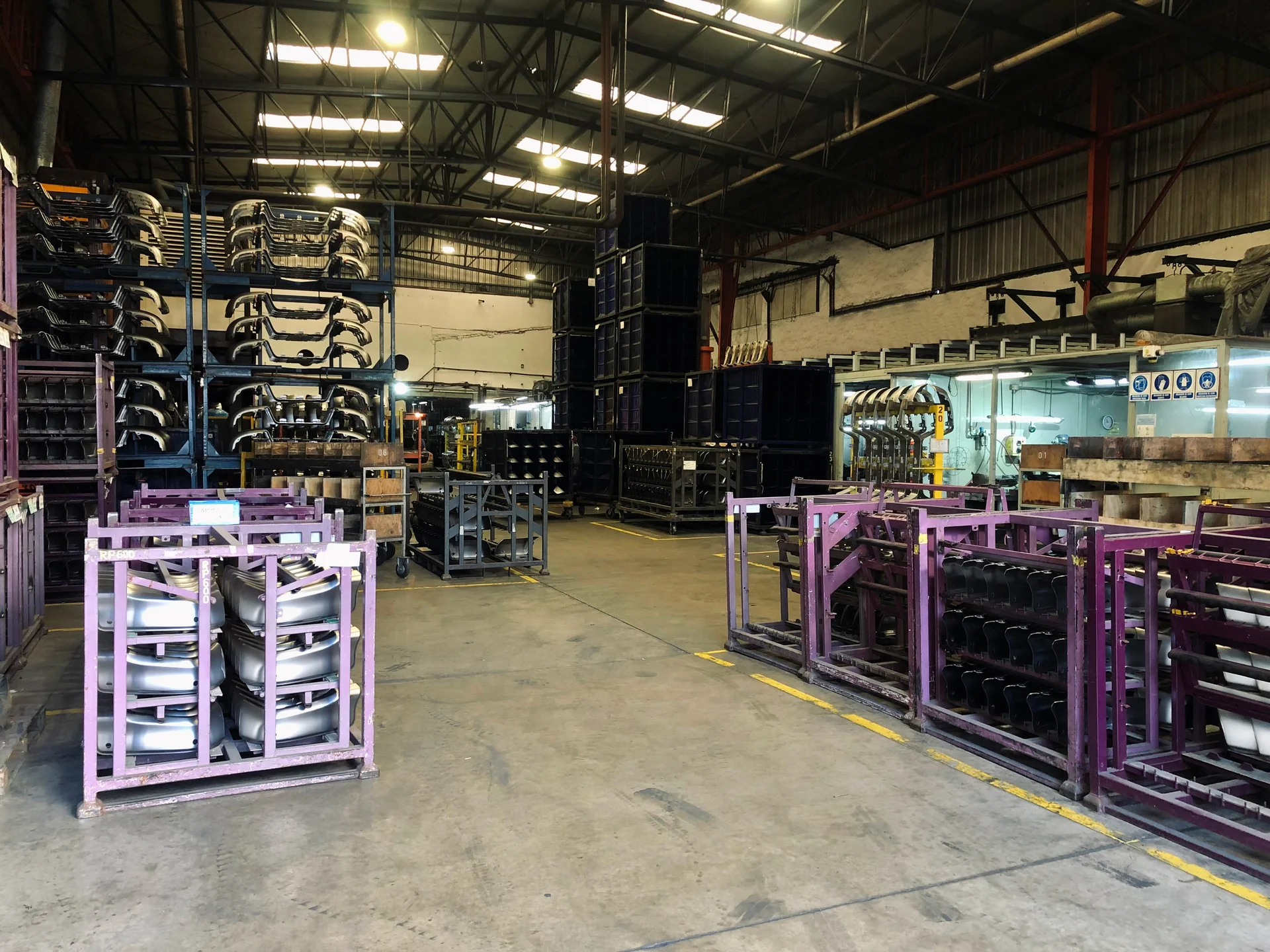
Four decades of building industrial expertise.
Since 1986, Dro Pur has specialized in surface treatments for metal parts, developing solutions for a range of products and sectors.
Throughout its history, the company has added processes, expertise and inspection capabilities to meet demanding requirements.
The journey behind
what we do today.
- 1986 First developments: faucets and oil
- Early 1990s Semiautomatic line for faucets
- 2001 Automated line with the Tri-Nickel process
- Today Three processes in operation
Dro Pur's first developments were related to faucets and the oil industry.
In the early 1990s, the company took its first major step forward by adding a semiautomatic line for faucets, enabling chrome, gold and nickel plating, as well as cathodic electrophoretic lacquering.
At the same time, it expanded its experience in oil industry applications with specific treatments such as anti-galling copper plating, manganese and zinc phosphating, and thick tin plating.
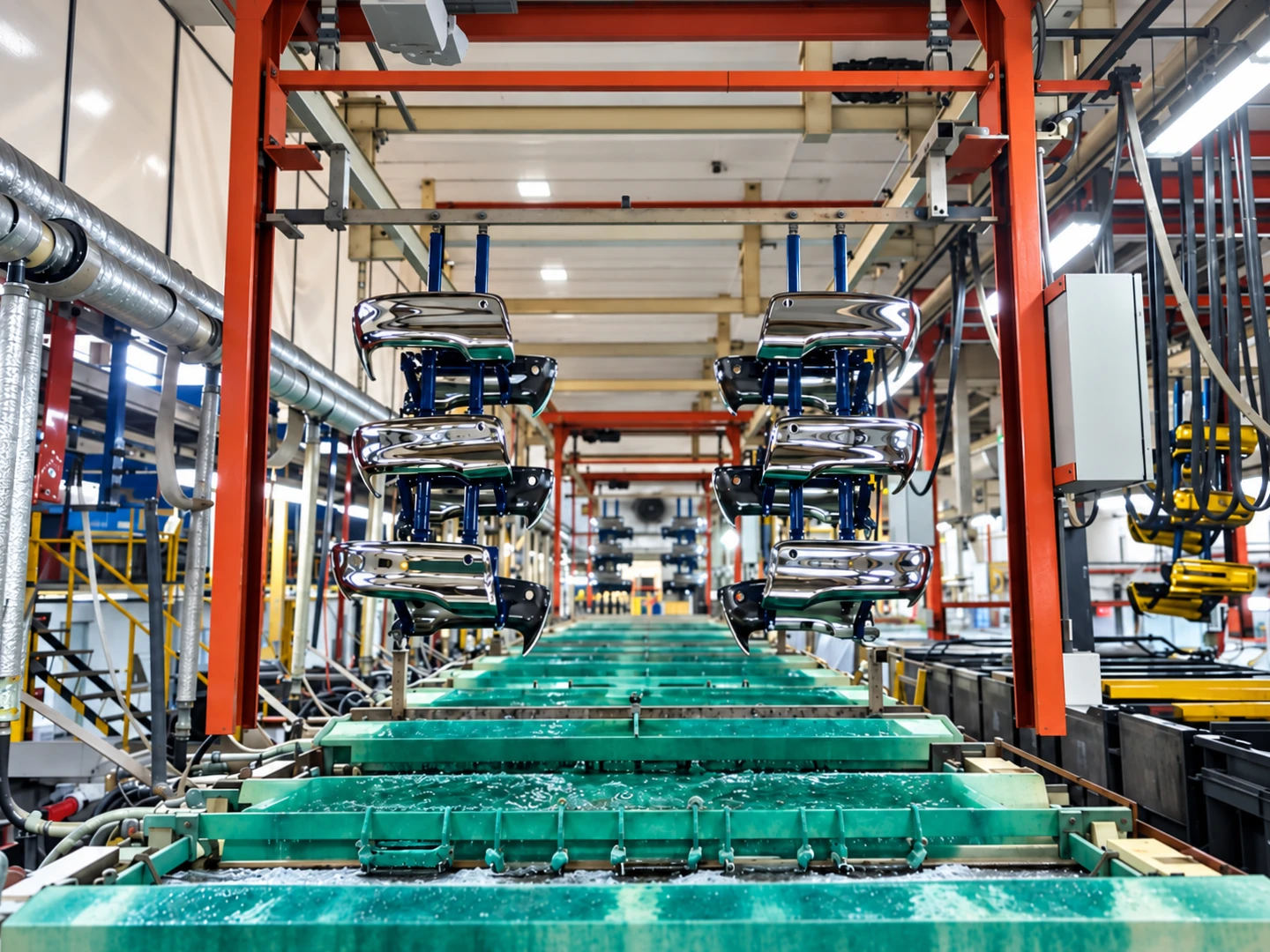
A new phase began in 2001 when the semiautomatic line was converted into an automated line using the Tri-Nickel process for the automotive industry. From then on, Dro Pur took part in programs associated with Toyota, Ford and Volkswagen, building more than two decades of experience in large-scale production.
A track record proven in real production.
More than 4,000,000
bumpers processed.






Dro Pur works with companies in the automotive and oil and gas sectors, among other industrial applications.
A foundation for new projects.
This history has given us the experience and confidence to take on more.
We have learned to deliver the same result part after part, to listen to each customer's needs and to develop the solution together.
Today, with our three operating processes, we are looking toward new horizons: different parts, different sectors and new challenges.
If your part is our next challenge, we would like to hear about it.
What part do you need treated?
Tell us about the part, its material and your estimated volume. We will assess it and propose how to treat it.